What can you expect from this article?
This article shows how safety protocol animations support safer behaviour at work. It explains how visual storytelling strengthens safety training, helps employees understand complex topics and supports workplace safety in everyday situations. We also step back to show how safety communication has evolved over time and why those changes matter now.
What did safety communication look like before it became visual?
Not that long ago, safety communication looked very similar in most organisations. There were procedures. There were training sessions. There were documents to read and sign. Often entire binders of rules, meant to prepare employees for every possible situation.
Training usually took place in conference rooms, with presentations full of text. Someone explained. Someone took notes. Someone waited for it to end. In the best-case scenario, people left with a vague feeling that „something had been covered”. In the worst case, with the assumption that they would come back to those rules only when a problem actually appeared. Curious which group you were in 😅?
Let’s clarify one thing. This wasn’t bad will or a lack of responsibility on the organisers’ side. Not at all. That was simply how communication worked at the time. Information was delivered in an organised, formal, fairly rigid and schematic way. The problem was that it rarely reflected what everyday work actually looks like. And work was (and still is) changeable, unpredictable, and full of small decisions made on the go, in real time.
Fortunately, nothing stays the same forever…
Some organisations recognised the problem early and tried to make safety training more engaging. Humour, simple demonstrations and the now-famous „wrong way/right way” format were early attempts to bridge the gap between procedures and real behaviour.
Over time, it became clear that a noticeable gap existed between training and real action. Procedures were known in theory, but difficult to recall when they were genuinely needed. That was the moment when organisations started to question whether the way safety topics were communicated actually translated into lasting understanding.
Why did safety communication have to change?
If it had worked well enough for years, why touch it at all? Why change something that has always been associated with obligation, rigid rules and training sessions to tick off? Safety was never an area where anyone expected excitement or inspiration.
The problem is that the world of work no longer looks the way it did when those communication methods were created. What once felt sufficient increasingly struggles to keep up with reality. And it is in everyday work (not during training sessions) that it has become clear something simply no longer adds up.
Below are three reasons that most often led organisations to ask an uncomfortable question:
„Are we communicating safety in a way that actually helps people act?”
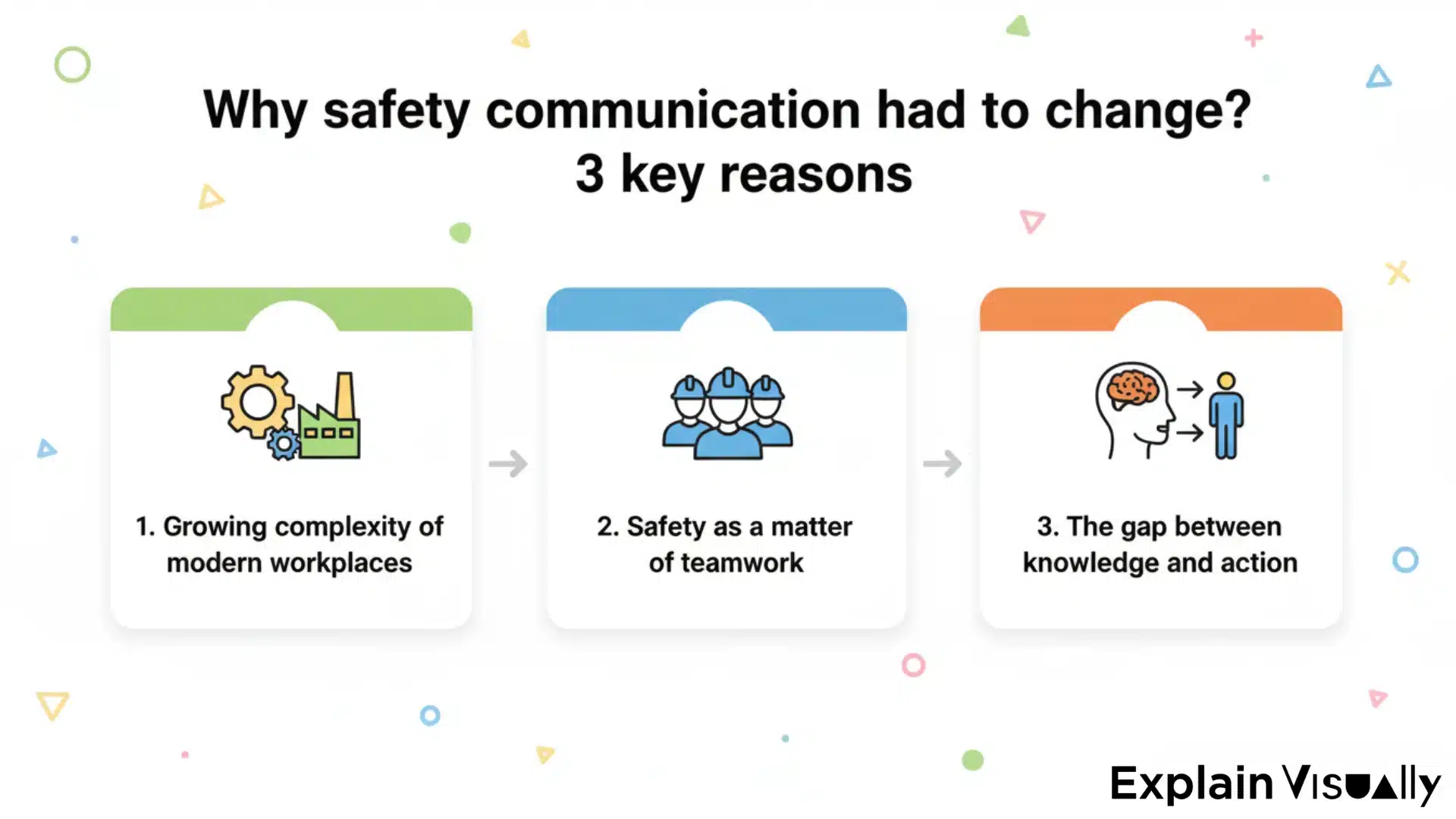
1. Growing complexity of modern workplaces
Multitasking is a concept you are certainly familiar with. The modern workplaces consist of more moving parts than ever before. Employees handle equipment, systems and tasks that involve different types of risk, very often within a single role.
Procedures now need to account for physical hazards, digital environments, shared spaces and constantly shifting responsibilities. As a result, the amount of safety-related information has grown significantly compared to the past.
With this complexity comes another challenge: how to communicate that information in a way that remains coherent, clear and possible to remember. When training materials cover an ever-expanding range of scenarios, the need for structure and consistency in safety communication becomes hard to ignore.
2. Safety as a matter of teamwork
Workplace safety rarely depends on one person alone. More often, it is shaped by how people work together day to day, how they respond to one another and how responsible they feel not only for their own actions, but also for others.
A sense of shared responsibility grows out of relationships, trust and a clear understanding that safety is a team matter. When people know what is expected of them, and why it matters, cooperation comes more naturally. So does mutual support and the willingness to react when something feels off.
When safety communication fails to connect with the everyday reality of teams, it remains something separate. A formal requirement that exists on paper, but does not always translate into behaviour.
3. The gap between knowledge and action
Many workplace incidents happen despite the presence of procedures. The rules are written down, the training has taken place, and yet uncertainty appears at the critical moment.
This usually happens when knowledge is difficult to recall or does not quite fit the situation at hand. In those moments, people start to improvise, rely on assumptions or fall back on experience that may not be enough.
It is this gap between what we know in theory and what we do in practice, that pushed organisations to look for clearer, more usable ways of communicating safety.
Why animation is changing the way safety procedures are communicated?
This is where we get to the core of the issue. To a question that sooner or later comes up in every organisation: why animation? Is it about trends, new technologies or aesthetics? Or just another way to “modernise” training?
The answer is much simpler and far more fundamental. It comes down to how the human brain works and how it processes information. Animation is not effective because it looks modern. Especially when we are talking about familiar 2D animations, which are hardly a new invention and have existed alongside other visual formats for years. Its strength lies in the fact that it aligns with how people see, remember and respond to stimuli.
Under pressure, stress or cognitive load, the brain does not analyse content line by line. It responds to images, movement, sequences and visual signals. Animation works well in situations where quick recognition and the right reaction matter. Its effectiveness is grounded in scientific knowledge rather than short-lived trends. That is why it has become such a necessary and effective tool for communicating safety procedures today.
If you’re interested in 2D animation as a format, we explore it in more detail in our article: What is 2D animation? Introduction to the basics.
How the human brain processes visual information?
The human brain is primarily a visual organ. The vast majority of information it receives comes through visual stimuli, and this information is processed faster than text. Images are recognised almost instantly, without the need to translate them into words.
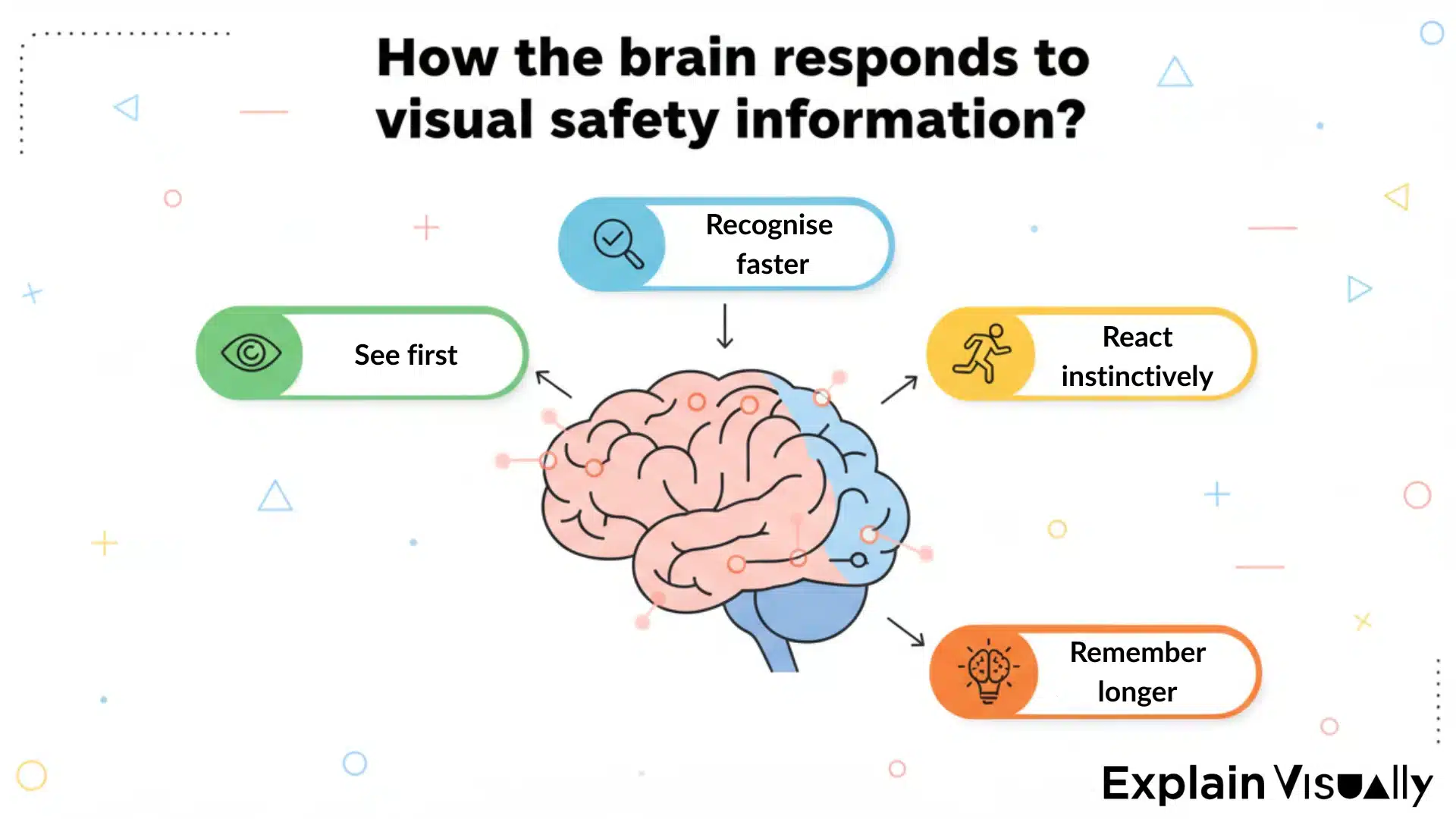
Research in neurobiology and cognitive psychology shows that visually presented information is remembered for longer and retrieved more quickly than information delivered only in written form. This effect is especially strong when visuals are combined with narration or sound.
In the context of safety, this matters a great deal. In real situations, procedures are not read. They need to be recognised. Decisions are made quickly, often automatically. Animation supports this mechanism because it relies on stimuli that the brain processes most efficiently. [1]
Making complex procedures simple and intuitive
Safety procedures are rarely simple. They consist of multiple steps, exceptions and dependencies. Trying to communicate all of this through text alone often leads to information overload, especially for people who are expected to apply these procedures in real situations.
Health and safety whiteboard animation for Silgan (Explain Visually, English version).
Animation helps bring order to this complexity. It shows sequences of actions, decision points and possible consequences in a way that feels intuitive and easy to follow. Instead of reading descriptions of what comes next, viewers can see how a situation unfolds.
This approach aligns closely with research on cognitive load. When information is presented in clear segments and in the right order, the brain can process it more efficiently without losing focus or attention. [2]
Overcoming language and cultural barriers
More and more teams no longer share a single language. And this is not only about nationality. Differences also appear in how instructions are interpreted, how shortcuts are understood, or how seemingly obvious rules are read. What feels clear to one person can be ambiguous to another.
In this context, text-based procedures start to drift. Even when they are correct, well written and compliant with guidelines. Everyone reads them through their own experience, context and level of language proficiency. The result is predictable: the same rules begin to function differently in practice.
Visual communication introduces a shared point of reference. It does not remove differences and that is not the goal. What it does is narrow the space for misinterpretation. It helps teams refer to the same picture of a situation, across languages, levels of experience and roles within an organisation.
Research on the effectiveness of visual instructions and cross-cultural communication confirms that this approach reduces misunderstandings and increases consistency in how procedures are understood within international teams. [3]
Analysing safety procedures before visualisation
You may already be at the point where there is no need to convince you that safety protocol animations make sense. You see their value. You understand why organisations turn to them. But another question quickly follows: where should you actually start?
And that is a very good question. Because effective safety animation never starts with style, format or even a storyboard. It should always start with understanding the procedures that already exist within the organisation and how they are used in practice.
At this stage, the focus needs to be on a few fundamental things: critical moments, the most common mistakes and behaviours that carry the highest risk. We all know that the goal is not to transfer entire documentation into animation. That would not even be possible! What matters is clearly identifying what truly counts in specific situations.
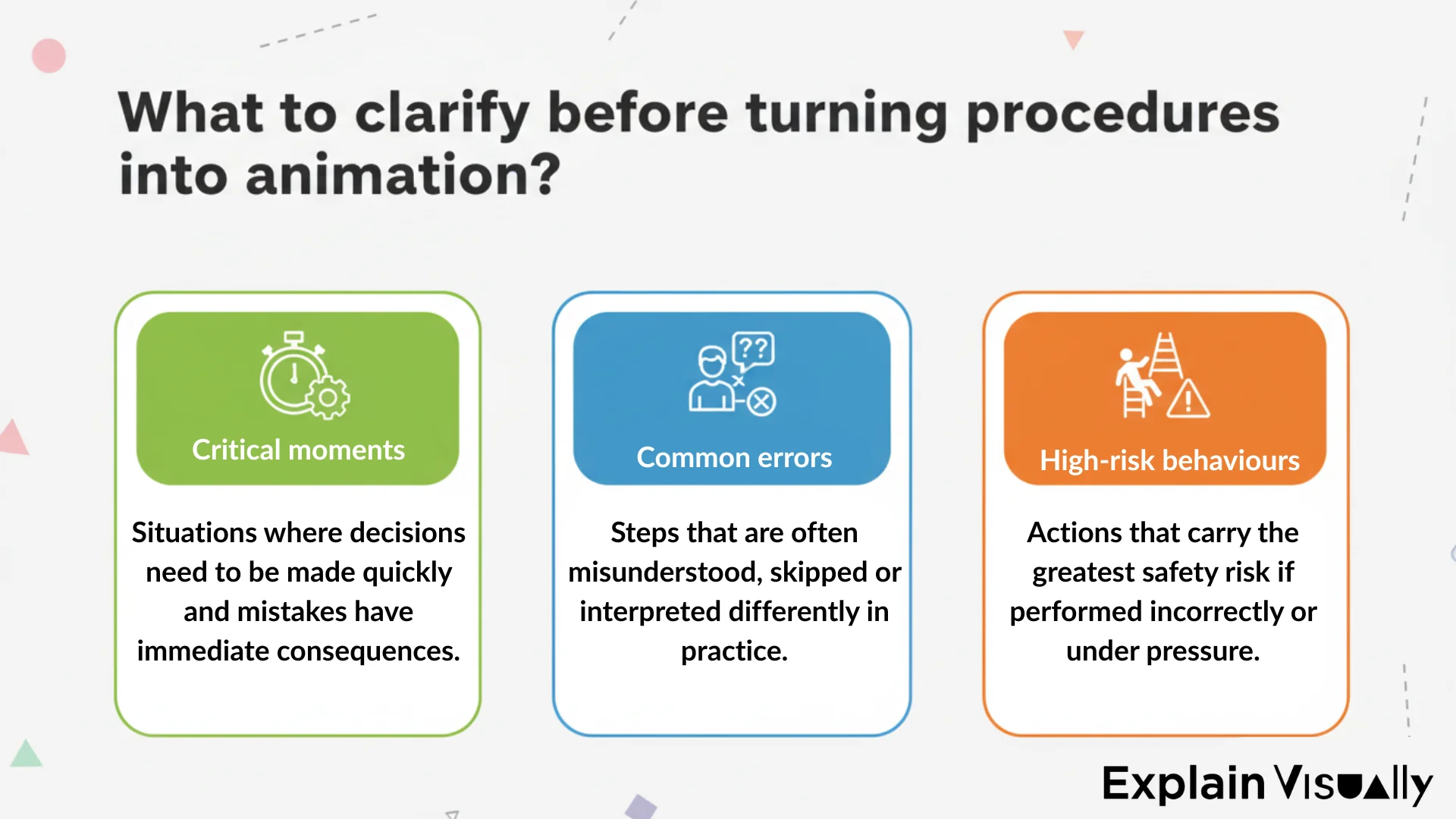
Only once this work is done does it make sense to move towards visual content that actually supports understanding and action.
Animation formats that work best in safety training
Let’s assume that procedures are already clearly defined and priorities are in place. At that point, choosing the right format becomes much easier. What matters most here is an individual approach to the topic. Different safety situations call for different visual solutions. There is no single format that works equally well in every context. And this is a sentence worth remembering.
Below are several animation formats most commonly used in safety training. Why these ones? Because each of them responds to a different set of needs.
- Short-form modular animations
Short, modular animations work particularly well for microlearning and regular refreshers. Instead of one long training video, information is divided into smaller segments that can be revisited whenever needed.
A health and safety video made in professional animation studio (Explain Visually, Polish version).
This format fits naturally into busy workdays. It helps reinforce safety knowledge gradually, without overwhelming employees with too much information at once.
- Scenario and decision-based animations
Scenario-based animations are designed to show „what happens if” situations. Participants can see how different decisions made in the same situation lead to different outcomes.
Rather than describing possible consequences, this format simply shows them. It supports better judgement and strengthens safety awareness in real working conditions.
- Onboarding and ongoing training content
Animations used during onboarding help establish a consistent safety standard from day one. The same visual language can then be reused in further training sessions and supporting materials.
Over time, this consistency reduces informational chaos. Safety messages are recognised more quickly, even as roles and responsibilities change.
Work standards at PGE – whiteboard animation (Explain Visually, Polish version).
In this article, we focused on when and why specific formats make sense. If you’re looking for a detailed breakdown of animation formats, practical examples and a closer look at the full process you’ll find it here: How animation helps explain safety procedures? Benefits and insights.
Collaboration between safety experts and visual designers
We want this to come across clearly: effective safety communication is rarely the result of one side working alone. Even the most carefully written procedures will fall short if they are not translated into a language people actually understand in their day-to-day work.
On the other hand, visually appealing content without a solid subject-matter foundation quickly loses credibility. In our view, real value begins exactly where these two worlds meet.
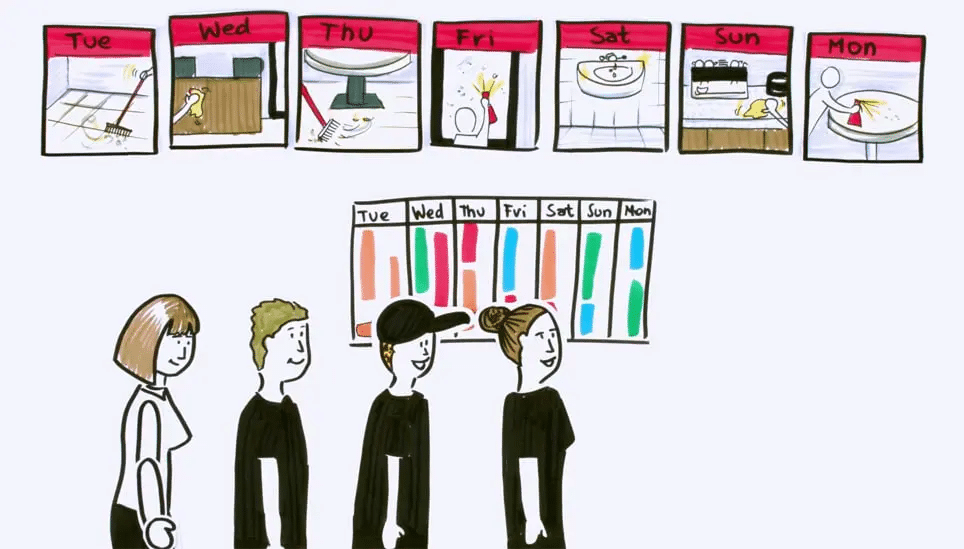
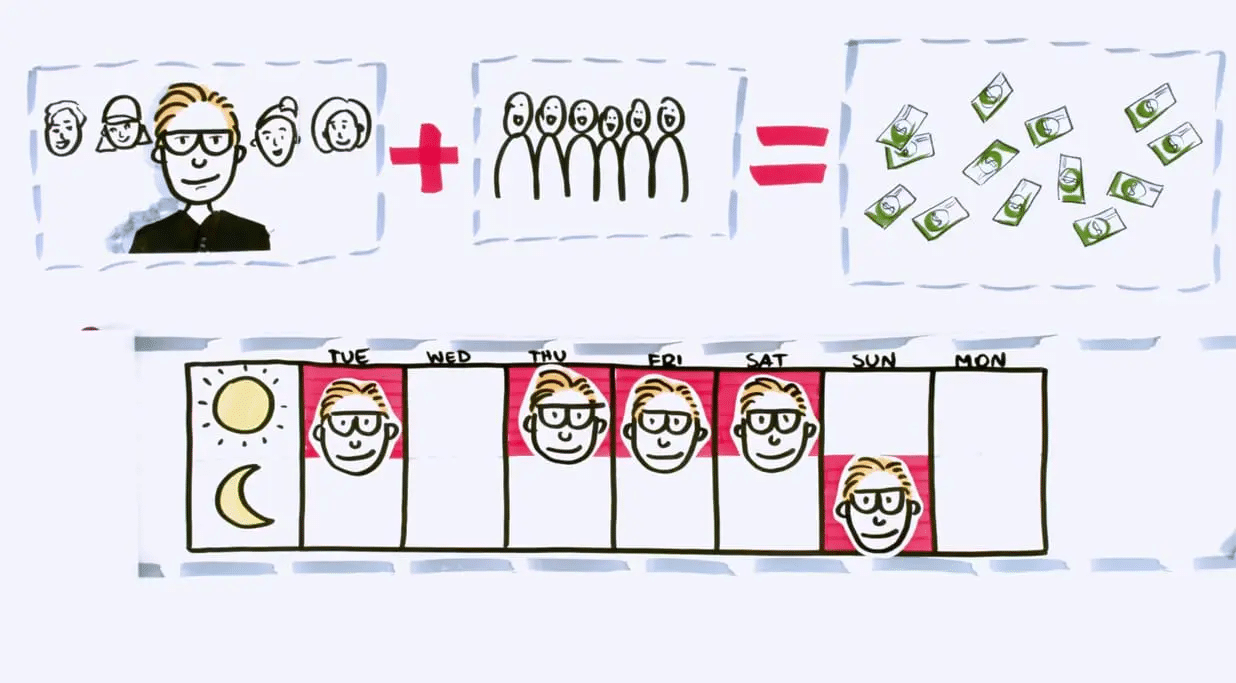
That is why safety protocol animations rely on close collaboration. Safety experts bring knowledge, experience and an understanding of risk. Visual designers make sure this content becomes clear, logical and recognisable in specific situations.
The two perspectives fit together like pieces of a puzzle. And you’ll probably agree that it’s a fairly accurate comparison.
Why work with us on safety protocol animations?
At Explain Visually, everything starts with a conversation. Before the first sketches or storyboards appear, we take time to understand how procedures actually work inside an organisation, what challenges teams face and when safety communication truly matters. This approach allows us to create animations that are grounded in real working contexts.
Over the years, we have worked with organisations across a wide range of industries and environments, from industrial settings to fully digital teams. That experience has shown us that effective safety animation is part of a longer relationship. One in which materials can evolve, be updated and used consistently across onboarding, training and everyday communication.
That is why our animations are designed with the long term in mind. With consistency, recognisability and practical support for teams in their daily work. If you see safety as an ongoing process rather than a one-off task, you’ll feel at home here.
𝐄𝐱𝐩𝐥𝐚𝐢𝐧 𝐕𝐢𝐬𝐮𝐚𝐥𝐥𝐲 – 𝐁𝟐𝐁 𝐚𝐧𝐢𝐦𝐚𝐭𝐢𝐨𝐧 𝐬𝐭𝐮𝐝𝐢𝐨:
We create whiteboard animations for businesses
We create corporate explainer videos
We create visual storytelling for companies
Source:
[1] Weigert, A. J. (1991). Mixed emotions: Certain steps toward understanding ambivalence. State University of New York Press, link
[2] School of Civil Engineering, Georgia Institute of Technology, Atlanta Wan -Lee Yin: Some kinematical results concerning steady flows and extensional flows, link
[3] Conference: Conference on Human Factors in Computing Systems, CHI 1994, Boston: Talking through design: requirements and resistance in cooperative prototyping, link
Frequently Asked Questions
What are safety protocol animations?
Safety protocol animations are animated safety videos used in employee training to explain safety procedures in a clear, visual way. Instead of describing risks in text-heavy manuals, they show actions, consequences and correct responses through visual storytelling.
By using visual cues, movement and realistic scenarios, these animations help employees understand what is expected of them in real working conditions, not just during training sessions.
Why are animations an effective way of communicating health and safety?
Because they match how people actually absorb information at work. Animated safety videos combine visual and auditory elements, which makes complex topics easier to follow and improves knowledge retention over time.
They are especially useful in environments where attention is divided and decisions need to be made quickly, such as during emergency procedures or when working with hazardous materials.
Are safety animations suitable for regulated industries?
Yes, and this is where they are often most valuable. Regulated industries rely on consistency, accuracy and clear communication. Safety animation videos support compliance by presenting procedures in a standardised, repeatable format.
They are commonly used alongside traditional training methods to reinforce understanding, reduce workplace accidents and support compliance requirements.
Can animations replace traditional safety documentation?
No, and they shouldn’t. Written procedures and documentation remain essential for reference, audits and formal requirements.
Animations work best when they complement traditional safety training methods. They translate lengthy manuals into something people can actually recognise and recall in real situations.
How long should an effective safety animation be?
There is no single ideal length. It depends on the topic, the risk level and how the animation will be used.
In practice, shorter formats tend to work better:
- quick refreshers before tasks,
- focused modules for specific procedures,
- targeted content for onboarding or workplace training.
Are safety animations suitable for multilingual or diverse teams?
Very much so. In workplaces where people speak different languages or come from different backgrounds, text-based materials often lead to uneven understanding.
Animated safety training uses visual cues and realistic scenarios that reduce reliance on language alone. This helps teams share the same understanding of critical procedures, even across multiple locations.
How are safety protocol animations developed?
The process starts long before animation production begins. It usually includes:
- reviewing existing safety procedures,
- identifying critical steps and potential hazards,
- designing scenarios that reflect real life situations,
- testing content with representative audiences.
This approach ensures that the final animation supports safe handling, correct procedures and real-world decision-making.
What safety topics work best with animation?
Animation is particularly effective for topics that involve:
- complex procedures,
- emergency response and fire safety,
- equipment use and confined space entry,
- electrical safety and hazardous materials,
- situations where mistakes can lead to workplace accidents.
These topics benefit from dynamic visuals and simulated environments that show consequences without exposing people to real risk.
How do animations support long-term safety culture change?
Safety culture is built through repetition and consistency. Animated training videos make it easier to reinforce safety awareness over time without relying on repeated live training sessions.
When animations are integrated into learning management systems and used across employee training, they support consistent safety messaging and help reduce accidents in the long run.
What should organisations look for in a safety animation partner?
Not just animation skills. A good partner understands workplace safety, employee training and compliance requirements.
More importantly, they know how to turn complex safety concepts into visual stories that people actually remember and apply at work.