

How can you make your meetings, workshops, or events more engaging and memorable? How do you communicate complex ideas in a way that everyone will genuinely understand and remember? So many questions, and finding the right answers isn’t always easy. But we won’t leave you in uncertainty any longer! Discover the most effective technologies and tools for graphic recording – start transforming your meetings into visual experiences today!
People often say that graphic recording is the art of capturing events visually in real time. It means turning spoken words and ideas into images, diagrams, and key messages as the meeting happens. Is it mainly about professional drawing? Not really. If you look deeper, you’ll see it’s much more than that. It’s about listening carefully and picking out the most important points. It’s also about creating a visual story everyone can follow. With this approach, even complex topics become accessible, memorable, and easy to share.
Why are we sharing this guide on our blog? We believe visual thinking is not just a trend—it’s a necessity today. We’ve seen how the right tools help teams communicate complex ideas and spark creativity. These tools also help people remember information long after an event ends. Our team is experienced in graphic recording and facilitation. We constantly test, refine, and innovate to offer the best solutions. This article is your resource for everything about technologies and tools for graphic recording. It’s written by practitioners, for practitioners.
Introduction to graphic recording
Let’s start with a bit of clarification, as we’re certain that many people coming across this article may be encountering the term for the very first time. So, what exactly is graphic recording, and how can you spot a true professional in this field?
Graphic recording is the real-time process of visually capturing spoken content during meetings, workshops, or conferences. It’s a dynamic blend of active listening, note-taking, and drawing.
We can confidently say that this is a form of multitasking, where the graphic recorder synthesises key ideas, concepts, and messages into a visual narrative. Thanks to this approach, company representatives can transform complex ideas into clear, engaging visuals that everyone can grasp at a glance – and, just as importantly, can have a real influence on the final visualisation.
We want you to know that graphic recording is more than just drawing on paper or a screen. It’s about creating a shared visual story that helps people connect with the content and remember key points. It also lets audiences see the bigger picture. Graphic recording is a powerful tool for communication and collaboration. It works well for brainstorming, planning workshops, virtual events, and team preparations for big changes.
What makes a great graphic recorder?
Let’s paint a picture of the ideal specialist (and yes, we’ll use ourselves as the example😄!).
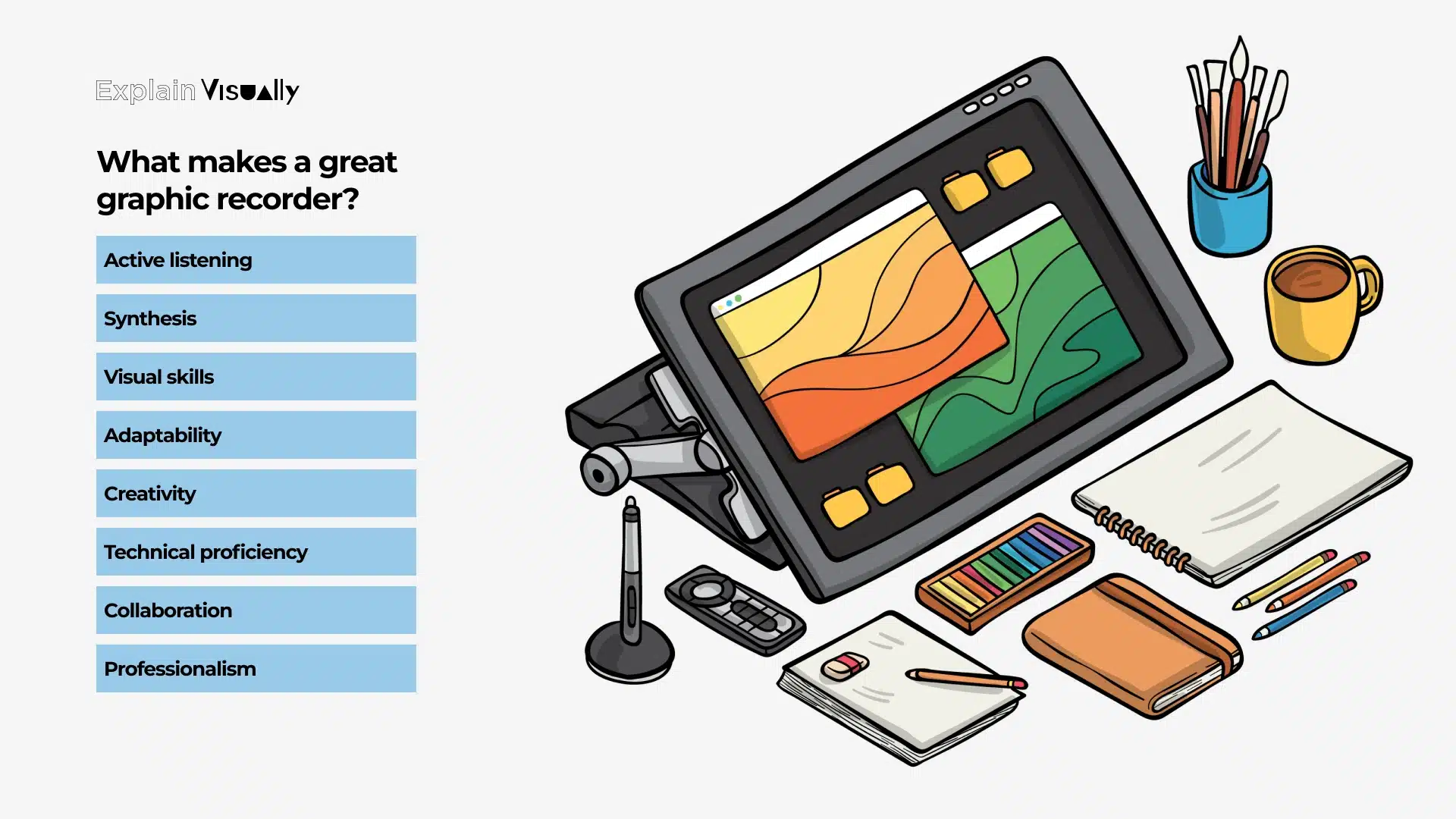
As we’ve mentioned, a great graphic recorder is more than someone who draws nicely while others speak. He transforms spoken ideas into compelling visual stories that enhance understanding and engagement. A person of many talents? That’s how we describe this profession!
At the heart of his skill set is active listening. The ability to tune in deeply and pick out the most essential points in real time. It’s not enough just to listen. A true specialist grasps the meaning, emotions, and connections between ideas, ensuring that the most valuable insights are captured.
Once he has absorbed the content, he applies synthesis, distilling complex discussions into clear and concise visuals. This ability is what makes graphic recording so effective. He turns what is often dense, sometimes overwhelming information into structured, easy-to-digest visuals that truly resonate with the audience.
Strong visual skills are also vital. A skilled recorder knows how to create engaging and clear imagery that enhances understanding, whether working traditionally with paper and markers or digitally with tools like the iPad Pro.
Adaptability is another crucial trait. A great graphic recorder can seamlessly switch between in-person, virtual, or hybrid settings, adjusting his approach based on the event format and audience needs. He feels comfortable working under pressure, ensuring that his visual storytelling remains effective no matter the circumstances.
Creativity plays an equally important role. Using metaphors, icons, and storytelling techniques, he brings concepts to life, making the final visuals are informative and memorable.
Beyond artistic talent, technical proficiency is essential. He must stay up to date with the latest digital tools, drawing applications, and online collaboration platforms. However, his work is not a solitary endeavour. Achieving the desired results requires collaboration and engagement from all parties. He works closely with event organisers, facilitators, and participants, ensuring the visuals align with the session’s objectives and truly reflect the essence of the conversation.
Finally, professionalism ties it all together. Respecting confidentiality, paying close attention to detail, and delivering polished, shareable visuals after an event are the hallmarks of a top-tier graphic recorder.
The best technologies and tools for graphic recording
We have to say it:
No matter how talented a graphic recorder is, the right technology and tools can make their work smoother, faster, and simply more enjoyable.
Over the years, we have tested all sorts of solutions, from basic setups to the latest gadgets, and we know that good technology isn’t just about fancy features. It’s about what actually helps the graphic recorder capture ideas in real time and share them with the audience (whether in a conference room or joining remotely).
So, what are the best technologies for graphic recording right now?
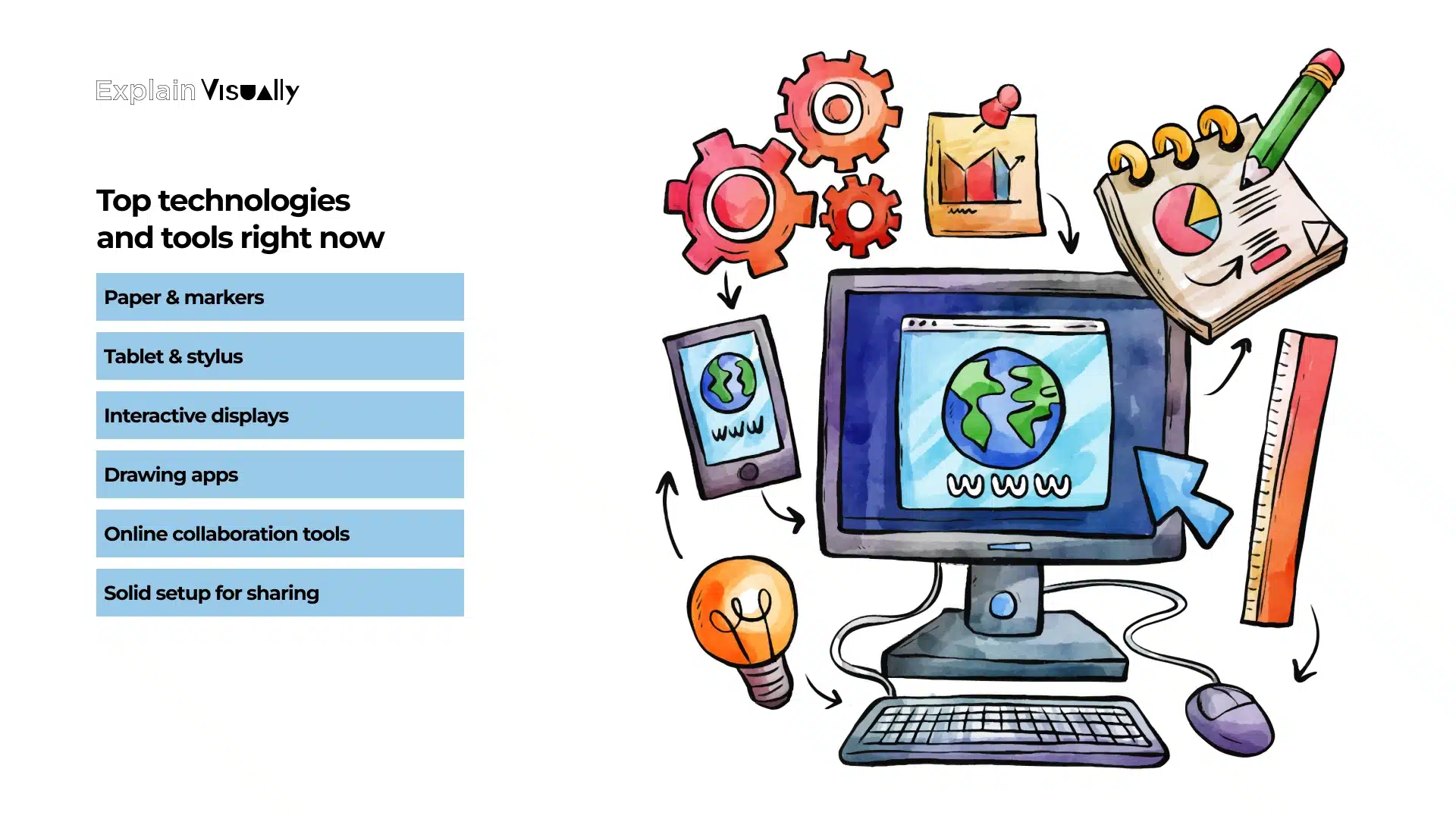
First and foremost, paper & markers. For traditional, in-person events, nothing beats the impact of large sheets and vibrant markers. Using high-quality paper and a range of marker colours allows the graphic recorder to create engaging visuals.
A reliable tablet is also a game changer. The iPad Pro, paired with the Apple Pencil, is the everyday companion of many graphic recorders. Why? It’s lightweight, responsive, and drawing on it feels almost as natural as pen on paper. Plus, with a good drawing app, the graphic recorder can easily switch between colours, add layers, and quickly make changes if something needs tweaking during a session.
But it doesn’t end there. Interactive displays, like the Wacom Cintiq, are ideal for those who like to work on a bigger canvas or need to share their screen with a larger group. These screens give the graphic recorder the freedom to move, zoom in on details, and keep everything crystal clear for both themselves and their viewers.
Let’s not forget about software. Drawing apps such as Procreate, Concepts, or Adobe Fresco open up a world of possibilities. Custom brushes, easy export options, and intuitive interfaces that don’t slow the graphic recorder down when ideas are flowing fast. And if working with a remote team, online collaboration platforms like Miro or Mural let everyone see the visual story as it unfolds.
Of course, good technology also means having a solid setup for sharing the work. Fast Wi-Fi, a high-quality webcam, and a reliable screen-sharing tool (Zoom, Teams, or Google Meet) ensure that the visuals look sharp and professional.
See how the traditional graphic recording process unfolds.
Why use graphic recording?
Perhaps you’re at a crossroads, hesitating over whether to introduce graphic recording at your company’s important meetings or industry events. You might be unsure how participants will react, or whether this kind of collaboration will actually make a difference. In other words: will it really pay off?
We’ve listed a few benefits below, though in truth, we could go on and on (and we’d be more than happy to discuss them with you directly).
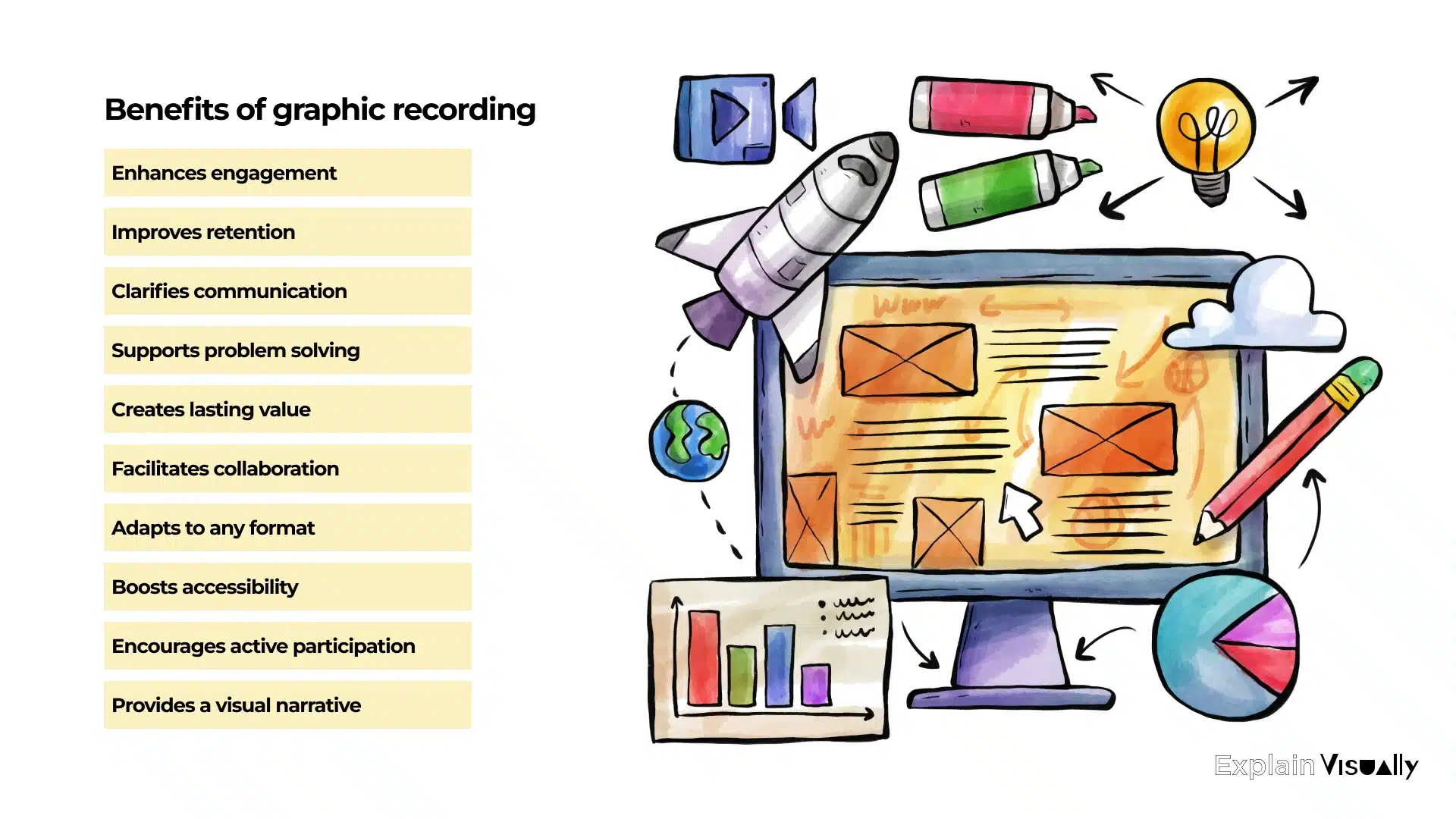
Enhances engagement – Visual note taking keeps participants focused on the topic, helps them pick out the most important threads, and encourages active involvement in the meeting.
Improves retention – People remember visuals far better than words alone. The fact is, most of us are visual learners. Graphic recording helps participants retain information long after the event.
Clarifies communication – Visual storytelling breaks down barriers, making it easier to communicate complex ideas to diverse audiences.
Supports problem solving – Visualising key points and concepts encourages brainstorming and new idea development. Problems and uncertainties aren’t ignored or hidden. They are identified and brought to light.
Creates lasting value – Visual records serve as a resource for ongoing learning, collaboration, and decision-making.
Facilitates collaboration – In workshops and brainstorming sessions, visuals help teams align on key messages and next steps.
Adapts to any format – There’s a huge amount of flexibility here. Whether you’re organising a virtual, hybrid, or in-person event, a workshop, or a meeting, graphic recording is an ideal choice. It’s a tool that truly stands out for its versatility.
Boosts accessibility – Visual aids can bridge language gaps and make content more inclusive for all participants. This is especially important for companies that value multiculturalism and have teams made up of people from various backgrounds.
Encourages active participation – When people see their ideas captured visually, they feel heard and are more likely to contribute.
Provides a visual narrative – A graphic recording session creates a visual story that documents the journey of the event, highlighting key moments and decisions.
Large scale graphic recording
It’s true that bigger isn’t always better, but when it comes to graphic recording, going large really does offer you and your team significant advantages.
Large scale graphic recording is all about making a big impact – literally!
Using large sheets of paper, foam-core boards, or interactive digital screens, graphic recorders capture key ideas and visuals that can be seen by everyone in the room.
Why go large scale?
Visibility – Large visuals ensure that everyone in the room can see and engage with the content. This is especially valuable in bigger spaces, where traditional notes or slides might easily get overlooked.
Impact – A wall-sized visual story creates a sense of occasion and makes the most important moments unforgettable. Such a display draws attention and helps anchor essential messages in participants’ minds.
Collaboration – Teams can gather around the graphic, add their own ideas, and see how their contributions fit into the bigger picture. This shared experience encourages more open dialogue and collective problem-solving.
Documentation – Large scale visuals serve as a lasting record of the event, supporting follow-up and ongoing communication. They can be photographed, digitised, and referred back to.
How we work large scale?
When we create large-scale graphic recordings, we focus on making visuals impressive and meaningful. Depending on the setting, we use high-quality materials. These include oversized paper sheets or sturdy foam-core boards.They often span several meters. This ensures every idea is captured in a way that resonates.
Our graphic recorders work swiftly, listening intently and translating discussions into real-time visual narratives. The ability to synthesize complex topics quickly is essential we distill information down to clear and engaging visuals that reflect the essence of the conversation.
For digital formats, we use interactive screens or projectors, allowing visuals to be displayed to an entire audience instantly. This method works particularly well in hybrid or virtual events. No matter the medium, our approach is always interactive. We encourage participants to interact with the graphics. The recording process becomes a two-way experience, making it even more engaging and relevant. This is made possible thanks to modern technologies and tools for graphic recording, which enhance interaction and improve the overall participant experience.
Read also: Enhancing engagement. How graphic recording can enhance virtual workshops?
Best practices for working with a graphic recorder – expert tips
We’ve saved a few valuable tips for the end—these will make our future collaboration much smoother (which we sincerely hope will happen).
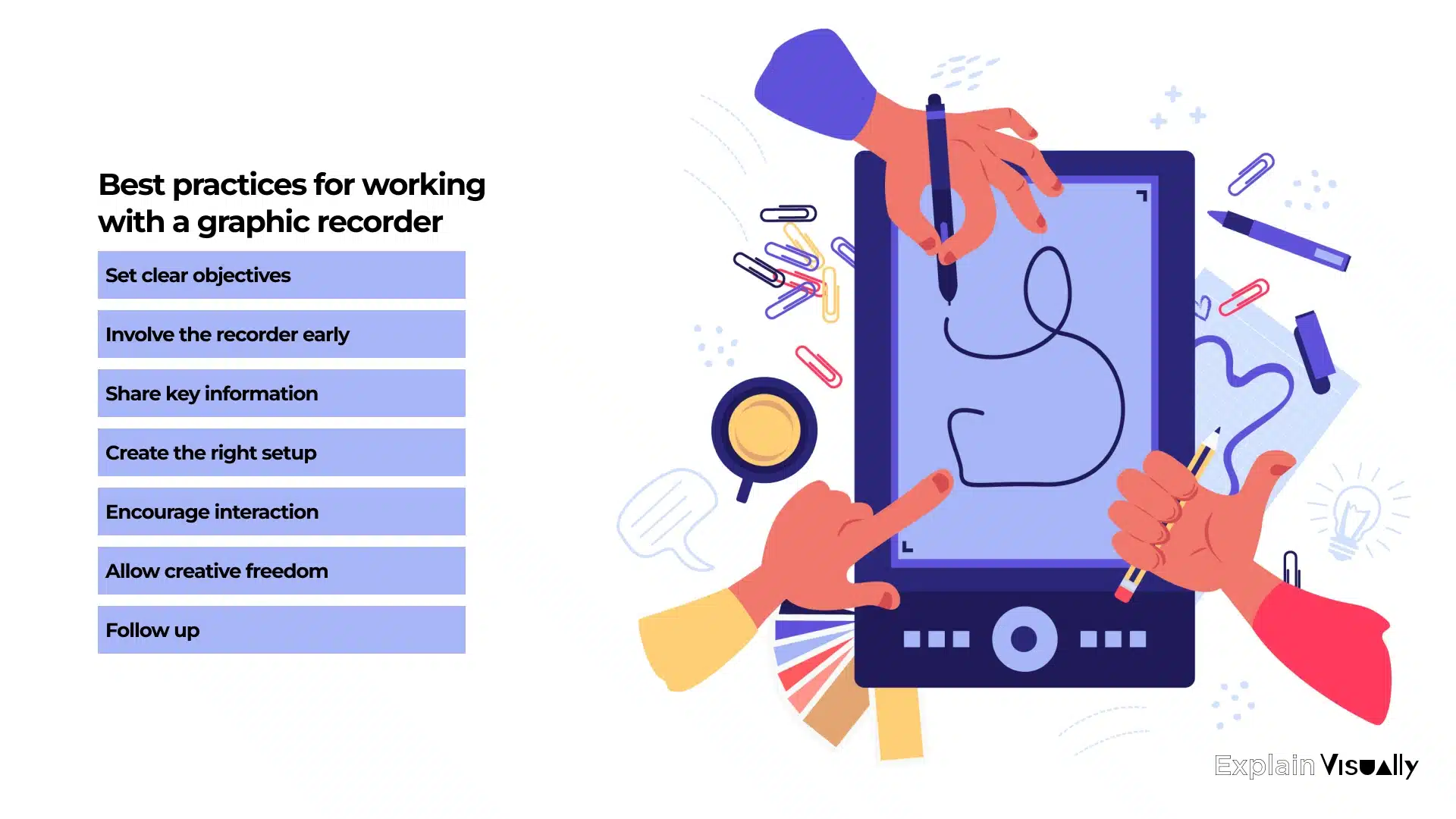
- Define what you want to achieve from the graphic recording session (essential messages, outcomes, or visuals to share afterwards).
- Bring your graphic recorder into the planning process so they understand your goals, audience, and event format.
- Provide agendas, background materials, and any important points in advance.
- Ensure good visibility for in-person events, or test your screen sharing and online collaboration tools for virtual sessions.
- Invite participants to engage with the visuals, ask questions, and contribute ideas in real time.
- Trust your graphic recorder’s expertise they know how to use visual metaphors and storytelling to make your content shine.
- Use the finished visuals as a resource for ongoing communication, training, or marketing.
Find the best graphic recording at Explain Visually!
At Explain Visually, we’re passionate about helping you communicate complex ideas with clarity and impact. Our team of experienced graphic recorders and facilitators are experts in visual thinking and storytelling. We also specialize in digital graphic recording. We’re ready to support your next event, workshop, or strategic meeting.
We offer both traditional and digital graphic recording, tailored to your needs. We support event planners, facilitators, and business leaders looking to make a lasting impact with visual aids. Partner with us to access the most effective technologies and tools for graphic recording.
Our offer includes:
- Graphic recording in person, digitally, or for virtual events.
- Visual note taking and visual storytelling for any format.
- Custom visual aids and graphics tailored to your brand and objectives.
- Support for event planners, facilitators, and business leaders looking to make a lasting impact.
Check out the details of our offer here.
