

Gone are the days when employees had to sit through lengthy classroom sessions or wade through thick training manuals. Today’s workforce expects something different, something that fits into their busy schedules and actually sticks. Training video production has become the secret weapon for organisations that want their training to actually work. Are you in on this?
Companies everywhere are ditching traditional training methods for something that actually works: video. Why? Is this something like a trend that, as we know, is here today and gone tomorrow? Nothing like that, because all signs in the sky and on Earth suggest (and studies confirm) that training videos have caught on permanently and are slowly becoming the standard.
Just think about it. When did you or your team last sit through a PowerPoint presentation and feel truly engaged? Video training transforms those mind-numbing sessions(sorry for the expression, but in our opinion it fits here) into something people actually want to watch and learn from.
When people watch training videos, they retain nearly all the information.
When they read the same content? They forget most of it within hours.
And that’s what we’ll focus on today: to convince you why changes in training methods are so important, and maybe even essential if you don’t want to waste time and care about having a productive team😉.
Introduction to training video production
You know that feeling when you’re trying to train your team and half of them are checking their phones while the other half are clearly thinking about lunch? Traditional training methods aren’t cutting it anymore. People learn differently now, and smart companies are catching on.
One of the strongest indicators of animation’s effectiveness comes from a comprehensive meta-analysis of over 20 studies conducted by a team of German researchers. The findings are clear: educational videos significantly outperform static visuals. Just good news all around, right?
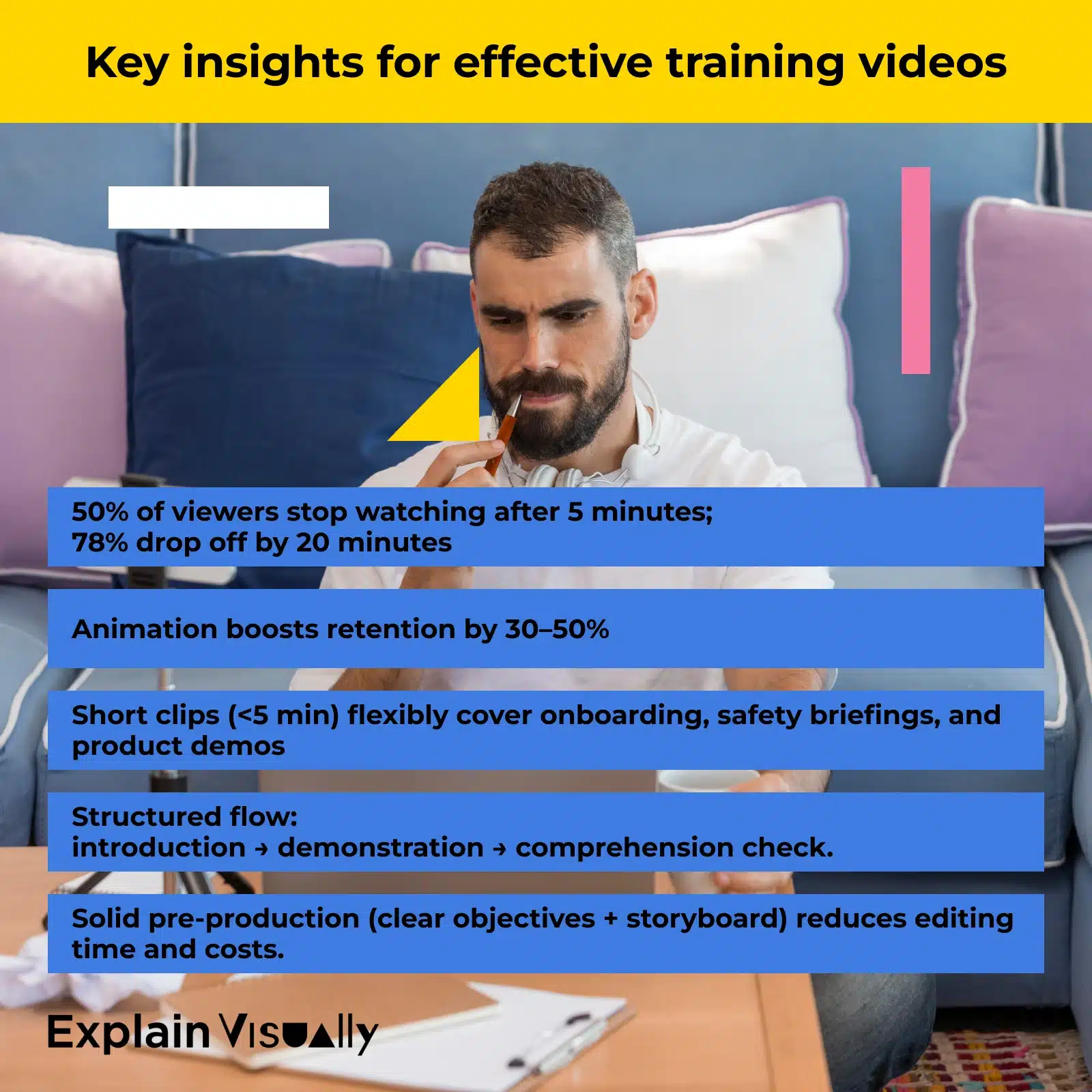
Training objectives. Training videos aren’t one-size-fits-all!
They flex to every objective on your list. Need to welcome new employees, refresh safety rules, or sharpen product demos? A single library of short clips covers them all. It provides the same guidance to every shift and every site. Visual cues anchor memory. Learners recall procedures long after the session ends, even under pressure.
Just press record? Not even close!
Today’s productions go far. A well-structured training film mirrors good teaching practice. It sets expectations, demonstrates each step with close-ups or graphics, and checks understanding before moving on. Because the footage never changes tone mid-sentence, learners trust it and trust fuels adoption. Studies show viewers retain visuals far longer than text, especially when motion highlights cause and effect.
Training video production costs? Production needn’t break the budget!
Planning is the real cost-saver: outline learning outcomes, script lean dialogue, and storyboard tricky sections before a camera appears. You’ll shoot fewer takes, trim editing time, and launch faster. Add voice-over in multiple languages and your film scales effortlessly across regions without reruns. Knowing your training video production costs upfront helps you make informed decisions about creating content that truly serves your team.
Not ready to prepare a video on your own? No worries! There are professionals who handle that and… you’re currently reading an article written by them 😆. Here’s one example of our work.
Which training do employees avoid like the plague? Obviously health and safety! How do you make H&S rules sound less like dry regulations and more like stories people actually want to hear? Check out our video (Polish version) created using whiteboard animation.
We hand-drew every element in our recording studio. The secret lies in neuroscience. When we follow the drawing hand, we unconsciously increase our attention and engagement.
Pick the style that suits the message
A whiteboard sketch simplifies compliance law.
A motion-graphic sequence deconstructs data flows.
An educational video instills best practice.
A live walk-through humanises customer service scenarios…
Blend formats as projects evolve. The library grows into a living knowledge base. In the end, video isn’t just a delivery tool, right? It’s the safeguard that every employee hears the same instruction, sees the same best practice, and applies it with confidence.
Video production process. Blueprint for successful training videos
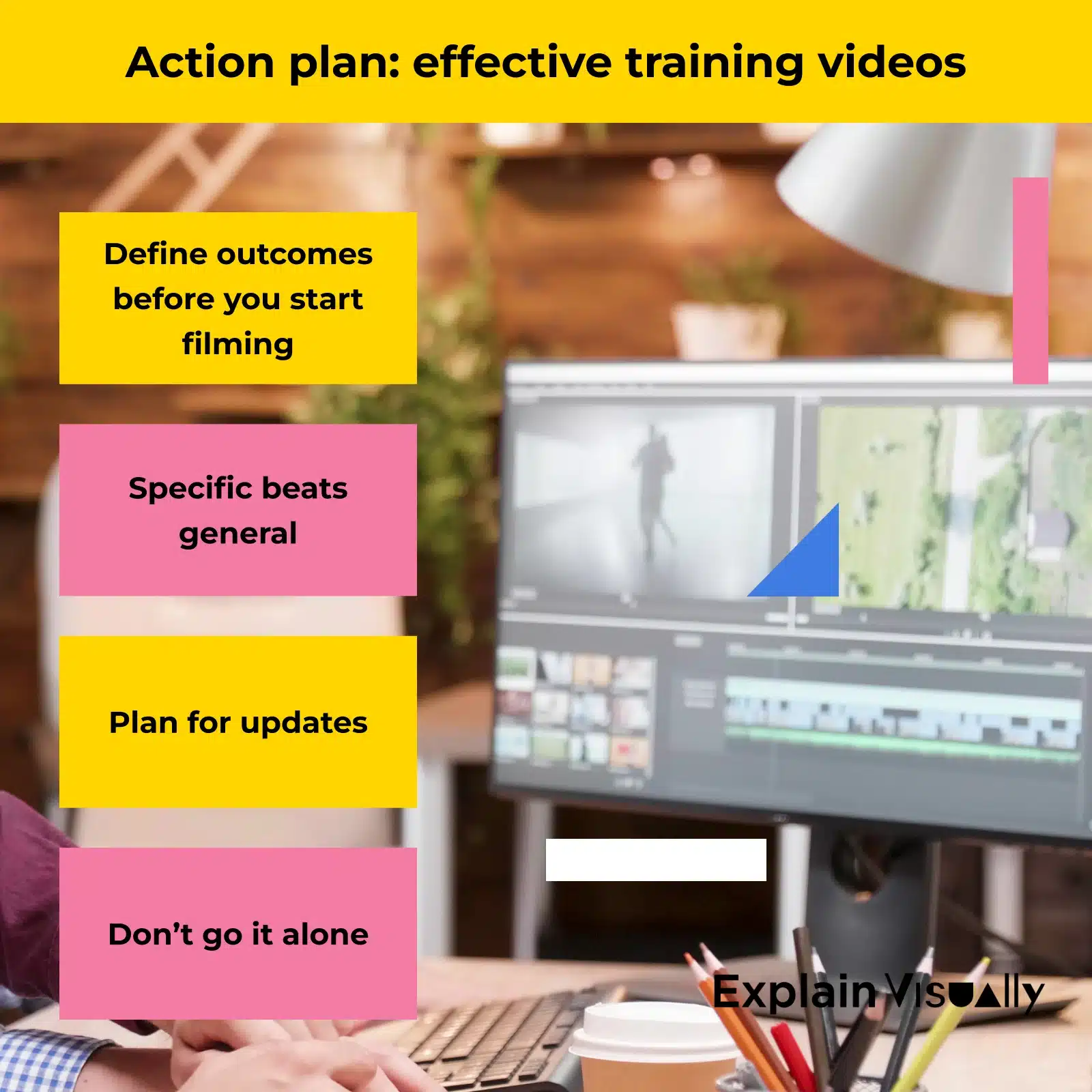
- Before you hit record, take a step back.
What exactly do you want people to know after watching your video? Good training starts with honest answers to tough questions:
Which skills are missing?
What mistakes keep happening?
How will you measure success?
Skip this homework and you’ll end up with expensive footage that looks professional but teaches nothing useful🙈.
- Smart planning pays off in real numbers.
Companies that plan their training properly see 218% higher revenue per employee and profit margins that beat competitors by 24% [1]. That’s not coincidence. It’s what happens when every video serves a clear purpose instead of ticking boxes on someone’s to-do list.
- Your objectives need teeth.
Instead of woolly goals like:
“Increase awareness.”
get specific:
“Show new technicians how to lock out electrical systems before maintenance.”
Trust us, that precision helps everyone! Scriptwriters know what to include. Actors understand their role. Viewers leave with actionable skills they can use immediately. Test your objectives by asking:
“Could someone watch this video and then do the task correctly?”
- Next, match your format to your message.
We’ve already talked about how important this is. So let’s say it again, just to be sure! 😄Complex procedures might need live demonstrations, while policy updates work perfectly as animated explainers. Think about where this content lives too. Will it slot into your existing training platform, or do you need new infrastructure?
- Finally, budget for the full lifecycle.
Production is just the beginning. Content needs updates when regulations change, systems upgrade, or processes improve. Build review cycles into your timeline and leave room for revisions.
You don’t have to figure this out alone. At Explain Visually, we’ve cracked the code on training videos that actually work. Drop us a line right after you finish this article.
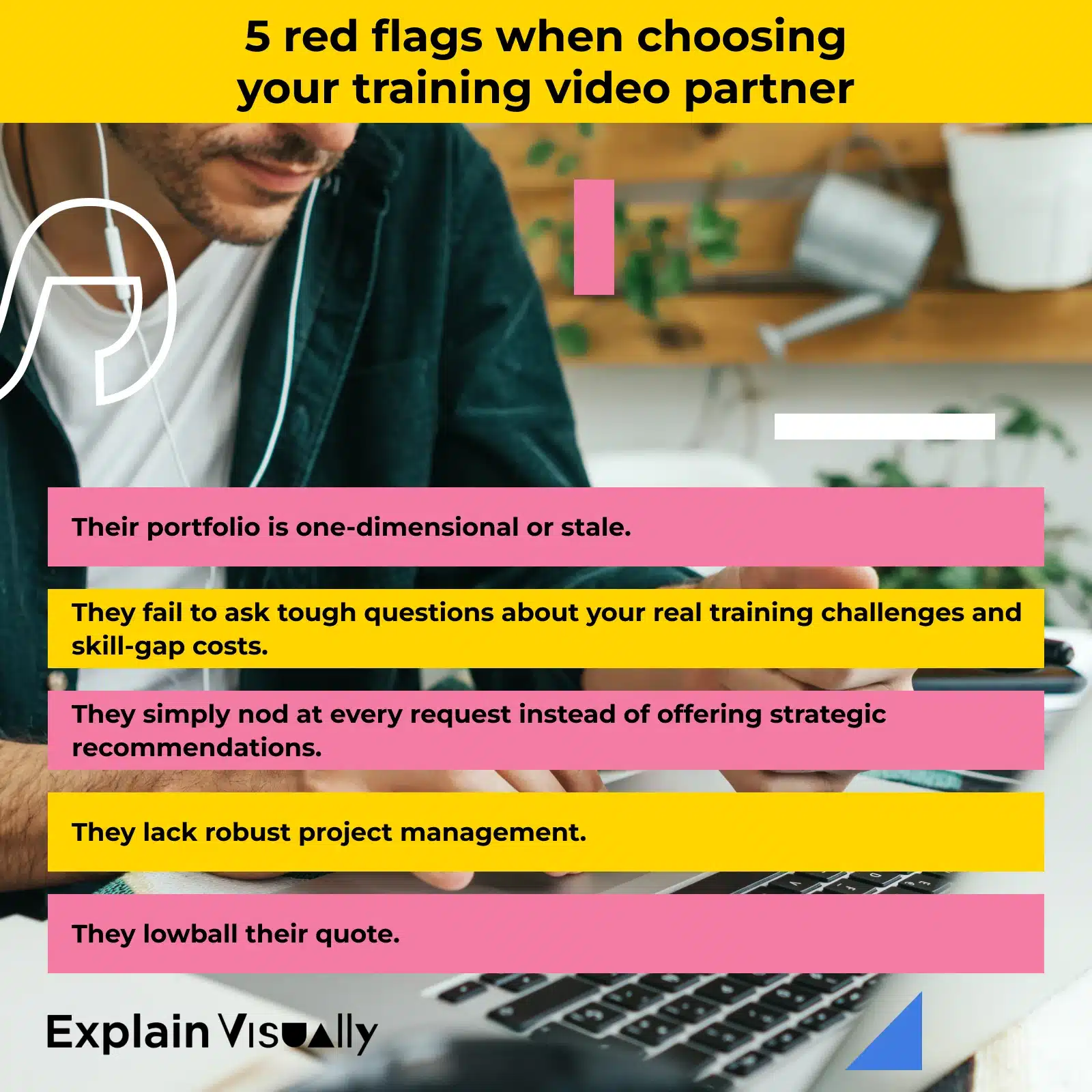
5 red flags when choosing your training video partner
Most video agencies can make things look pretty, but only a few understand training. You need partners who:
grasp why learners zone out,
what makes them remember,
how to turn boring compliance content into something people actually watch.
Start with their YouTube channel and case studies.
Can you see variety? Do they handle everything from animated explainers to live-action demonstrations? A crew that truly excels at training video production will offer that full spectrum—content your people would actually choose to watch during lunch break. If their portfolio feels stale or one-dimensional, keep looking.
See how mandatory this should be: Our Case Study and Portfolio on YouTube.
The best agencies ask uncomfortable questions (surprised?)
What’s really failing in your current training?
Which skills gaps cost you money?
They should challenge your assumptions about content format and delivery method. Anyone who nods along with every request probably lacks the experience to guide you toward better solutions.
Project management separates the pros from the wannabes.
Demand detailed timelines, clear revision limits, and regular check-ins. The right agency builds feedback loops that catch problems early rather than presenting finished work that misses the mark entirely.
Yes, budget matters, but cheap usually means expensive in the long run.
Agencies that lowball often compensate with rushed timelines, limited revisions, or cookie-cutter approaches. Invest in partners who understand that effective training content pays for itself through improved performance and reduced errors.
Of course, don’t swing to extremes and immediately rule out every agency that offers competitive rates. Absolutely not! Approach the process thoughtfully. We placed this point last for a reason. What do we recommend? First check quality and experience then the price.
Facing video-based training for the first time? Not sure what current rates look like? Get in touch with us. We’ll fill you in on the details.
Corporate training video production – creating the best training video (from script to screen)
We know you’re waiting for clear guidelines. How to tackle every stage of production, which pitfalls to avoid, and ultimately: how to get it right?
Learners check out after 20 minutes[2]. That’snot laziness. It’s brain science. Respect attention spans and you’ll see completion rates soar.
Your script andtraining materialare everything.Think of it as a conversation with someone who needs to get back to work quickly. Skip the corporate speak and get straight to what matters:
What they need to know?
Why it helps them do their job better?
Map out your points, with each one building naturally to the next. When visuals and narration work together instead of competing for attention, the message lands harder.
Format follows function, not fashion
Teaching someone to operate machinery? – Show them the actual process with close-ups and multiple angles.
Explaining policy changes? – Animation might work better than talking heads.
Global team? – Plan for subtitles or voiceover in multiple languages from day one.
Production quality matters more than you think. Poor audio kills credibility instantly, while shaky footage screams “amateur hour.” But don’t mistake polish for perfection.Your goal is clear communication, not winning film festivals.
Test everything before you go wide. Grab a few people from your target audience and watch them watch your video.
Where do they look confused?
When do they start multitasking?
Those moments tell you more than any focus group survey. Fix the obvious problems, document the feedback but… resist the urge to incorporate every suggestion. Sometimes you have to stay focused on your core message instead of pleasing everyone.
Of course remember, you don’t have to plan, script, shoot, and edit this all by yourself. At Explain Visually, we’ll do it for you. See how we helped Bahlsen to educate its employees more effectively? (Polish version).
Whiteboards, animations & more. What works in training videos? – Video production styles
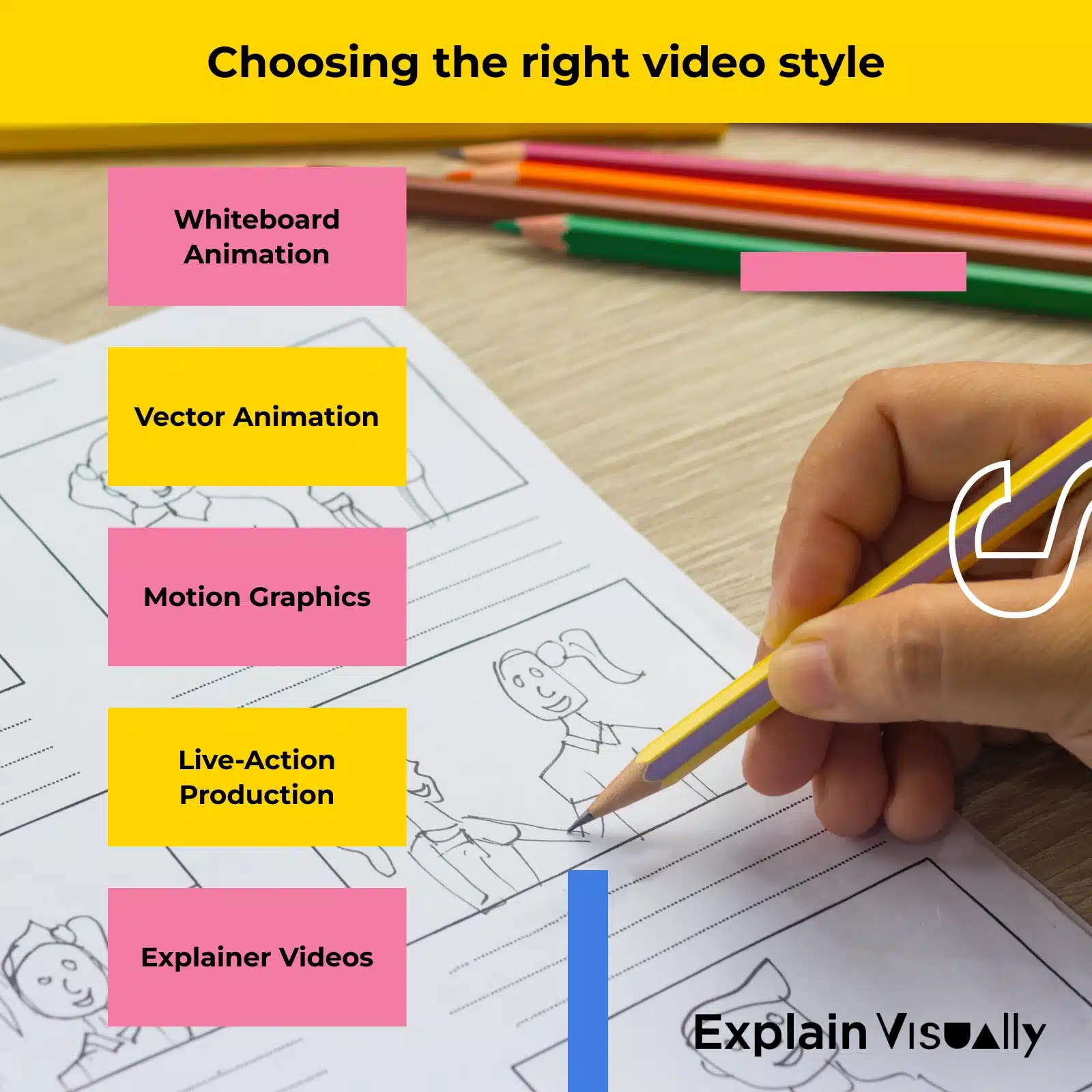
Whiteboard animation and digital whiteboard animation
Whiteboard animation is the go-to for breaking down complex material into a logical, visual flow. It’s perfect for showing step-by-step procedures or illustrating high-level ideas without overwhelming your audience.The hand-drawn style feels inviting. Learners can focus on your message instead of getting lost in text-heavy slides.
A whiteboard-style video created for AleBilet
Behind the scenes, we start by drafting a detailed storyboard, matching each narrative beat with a corresponding sketch. Our illustrators craft custom visuals that align with your learning goals, ensuring consistency across every frame. Finally, we apply colour grading and smooth out animations in post-production to reinforce clarity while retaining the genuine whiteboard look.
Vector animation
Vector-based graphics give you crisp, scalable imagery that looks great on any device. You can layer in quizzes, branching scenarios, and multimedia elements to cater to various learning styles. This approach makes your training both visually engaging and educationally effective.
Animation about the European Rover Challenge
Motion graphics
Motion graphics combine text, graphics, and animation to create visually compelling explanations of data, processes, and concepts. This style proves particularly valuable for training content involving statistics, performance metrics, or comparative analysis. Professional motion graphics maintain viewer attention while conveying complex information in digestible formats.
Live-action production
Live-action production is the ultimate reality check. You’re showing real situations and human interactions, which work wonders for customer service training, leadership development, and team-building. A professional crew guarantees top-notch picture and sound quality, while experienced teams handle complex shooting schedules and multiple locations with ease.
Explainer video
Explainer videos are concise, dynamic clips focused on a single core topic. They combine clear narration with engaging graphics and simple animations that highlight the key points. This approach lets learners grasp the essentials quickly, without interrupting their train of thought. Explainer videos are used to introducing new concepts, refreshing procedures, or summarising longer training sessions. The short format boosts attention, while the enjoyable style rewards even the busiest viewers.
Explainer video for Firstcoin
Want more? Read also: Top 15 animation techniques You should master for stunning visuals
Common mistakes in training video production
Too often, organisations pour money into slick videos only to realise they’ve missed the mark. By spotting common pitfall (like vague objectives, bad audio, or ignoring your audience) you can plan smarter, work faster, and get real results from day one.
1. Here’s the big one – making videos without clear goals.
If you can’t explain what viewers should know or do after watching, you’re already in trouble. Vague objectives lead to wandering content that confuses rather than teaches.
2. Bad audio is a deal-breaker
Viewers tune out faster than you can say ‘volume.’ No fancy visuals can save a video that sounds muffled or full of echo. Only clear, crisp audio keeps learners focused from start to finish.
3. Tailor your video to the audience – not the other way around
Take time to learn what your learners already know, what they do every day, and how they prefer to absorb information. When your script speaks their language and addresses real challenges, viewers lean in and remember more compared to generic, one-size-fits-all videos.
4. 20 Minutes is the attention limit
Long training videos turn people off. Busy professionals simply can’t carve out hour-long slots. Research shows most learners prefer videos under 20 minutes. Effective training video production acknowledges this, crafting concise, engaging segments that respect viewers’ time. Break complex topics into bite-sized modules that fit into tight schedules. A series of shorter clips increases completion rates and keeps viewers coming back for more.
5. Simplify the screen, let learners think
Ignoring design basics leads to on-screen chaos. Poor colour choices, inconsistent branding, and cluttered layouts overwhelm learners and block focus. Invest in professional visuals. Clean layouts, consistent colour schemes, and uncluttered elements that support your message rather than competing with it.
6. Make training accessible to everyone
Overlooking accessibility excludes learners with disabilities and risks non-compliance. Build captions and audio descriptions into your production workflow, rather than retrofitting them. Universal design principles benefit everyone. Reducing cognitive load and making your training more welcoming for all.
There’s a simple way to avoid all these pitfalls: partner with professionals. At Explain Visually, we combine expertise in pedagogy, storytelling, and visual production to create training videos that engage, educate, and stick.
Take a look at our portfolio:
Sources:
[1] Techjury:From Classrooms to Corporates: Key E-learning Statistics for 2025
[2] Marketing Charts:2022 Business Video Completion Rates and Other Benchmarks
