
Have you ever watched a brand video that looked great, only to forget it almost immediately afterwards? You saw a product, a logo, a few slogans, and then it all disappeared from your memory as quickly as it appeared, just like dozens of other videos. Sound familiar? Does that mean people do not like video? Not at all.
The real problem is that brands talk about themselves instead of telling a story in which the viewer can recognise their own problem, frustration or goal. Features, proof and experience still matter. But they only start to matter once the viewer understands why the story is relevant to them.
Why most brand videos are forgotten so quickly
You can have beautiful visuals, strong editing and a perfectly presented product, and the video can still leave no real impression. That happens when the viewer spends the entire time asking themselves one simple question: what is in this for me?
Many videos answer questions the audience has not even asked yet. They talk about how long the company has been around, what the process looks like and what values the brand believes in. Meanwhile, the person watching wants to know one thing first: do you understand their situation?
The mistake – talking about the brand instead of the audience
You think people watch a video thinking, “I wonder when they are going to show the logo.”? They watch for a much simpler reason. They want to know, as quickly as possible, whether what they are seeing has anything to do with their own situation.
You can spot this immediately in the language. If the video keeps repeating “we do”, “we believe”, “we created”, “we…”, the viewer quickly switches off. Nobody is looking for another story about a company. We are all looking for a story in which we can recognise ourselves.
In this video storytelling example, we do not begin with the company. We begin with someone who wants to launch their own online store but has no idea where to start or whether they will be able to do it at all. Only once the viewer recognises that uncertainty and thinks, “I would probably feel exactly the same”, does the solution appear, shown in three simple steps.
That is why a small shift in perspective changes everything. Instead of starting with “We help companies manage projects”, show a moment the viewer knows all too well. It could be chaos, unfinished tasks, endless revisions and no time left. Once the viewer sees their own problem, they are much more likely to believe that your brand can solve it.
What good brand storytelling actually does
Good storytelling makes the viewer think about themselves, not about the brand. Within a few seconds, they should see a situation they know all too well, feel that someone understands their problem, and then realise that there may be a simpler way forward.
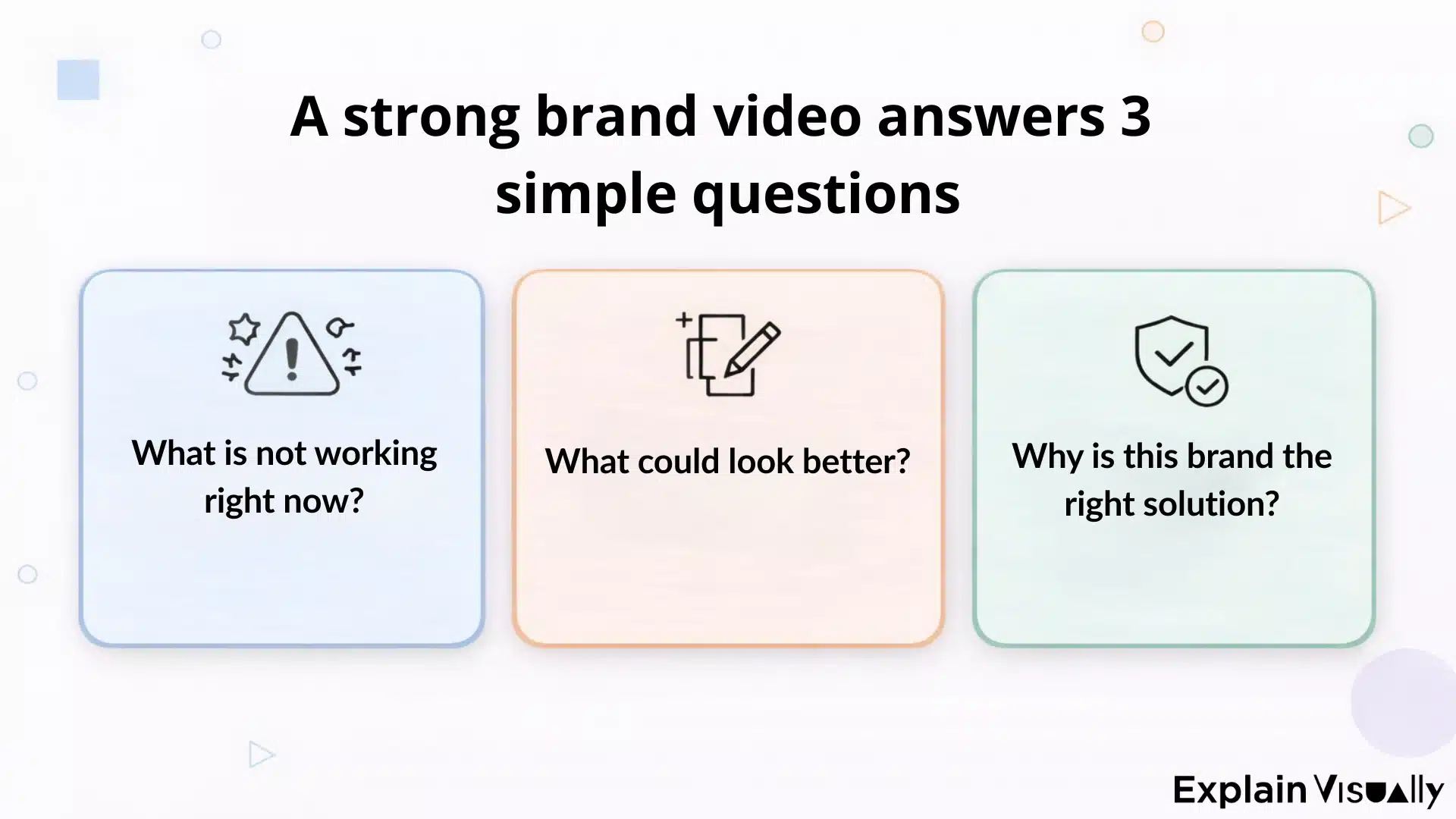
In many B2B videos we review, the viewer understands what the company does, but still does not understand why it matters to them. Usually one part of the story is missing: the problem is too weak, the change is unclear or the next step comes too late.
The most interesting part is that people rarely remember specific lines from a video. What they do remember is the moment they thought: this is exactly about me. It might be one scene, one short sentence or one very simple image. That is usually what people remember: the moment they recognised themselves in the story.
Your job is not to fit your entire company, every advantage and the full offer into one video. Focus on one problem, one change and one reason to keep watching, even if you have ten more things you would like to say.
The 3-part structure behind every effective brand story
Even a short video needs structure. Without it, the viewer sees individual scenes but never really feels where the story is going. A simple formula works best: problem, change, next step.
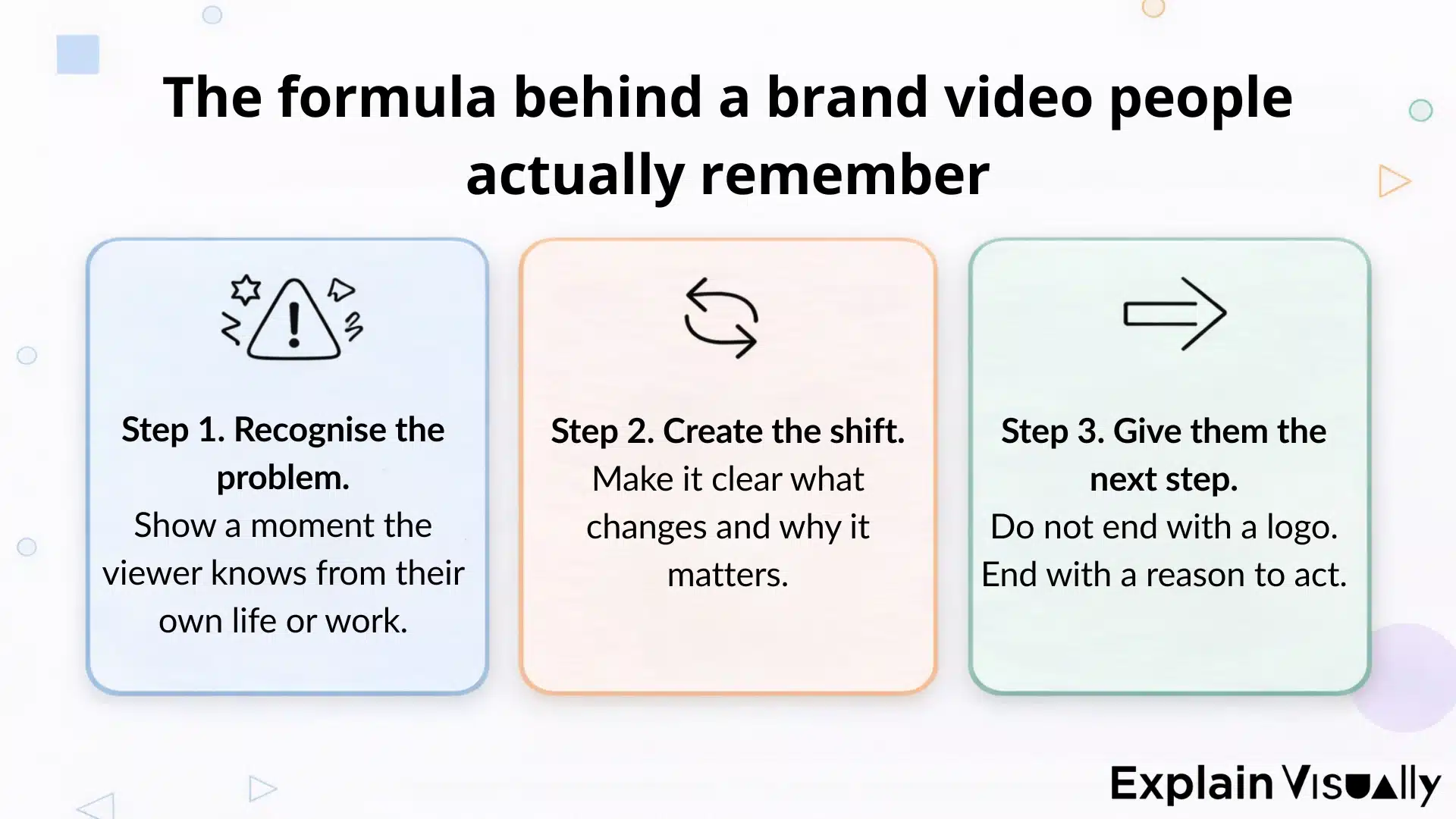
1. Start with tension
The first few seconds should show a moment that creates emotion or tension. It does not have to be dramatic. Sometimes an ordinary situation is enough: someone correcting the same document for the third time, a client still waiting for a reply, a team getting lost in the chaos of unfinished tasks.
This kind of opening works because the viewer immediately understands what is at stake. They do not need to know the brand yet. It is enough that they recognise the problem.
2. Show the change
The biggest mistake happens when the video stops at showing the product. The product itself is rarely interesting. What matters is what it changes.
Instead of showing only the app, service or process, show the difference between before and after, less chaos, less stress, more time, more confidence. This is the moment when the viewer starts imagining themselves on the better side of the story.
In the video for Ceneo.pl, we first meet Olga and Inga and the problem they are facing. Only later does the solution appear, along with the change created by the new Handmade category. Because of that, the viewer is not simply watching a video about a feature. They are watching a story in which they can recognise their own situation.
3. End with a clear next step
Once the story is working, it is surprisingly easy to ruin it at the end. The video finishes, the logo appears and… nothing else. The viewer should know exactly what to do next (click, book a call, watch a demo, download the offer). The simpler and more natural that next step feels, the more likely it is that the story will continue after the video ends.
Great storytelling does not depend on a famous brand
We have often spoken with companies that were convinced it would be difficult to create a good video because they were only just starting out, their brand was not yet recognisable or they had not been on the market for very long. Yet in situations like this, storytelling matters most.
When a brand is new, people do not make decisions because they recognise the logo or the company name. They decide only when they quickly see that you understand their problem and can show it better than anyone else. That is why you do not need to prove how big, experienced or professional your company is. What matters much more is showing one situation the viewer recognises from their own life or work. If, after a few seconds, they think “that is exactly my problem”, trust appears much faster than after another sentence about how many years you have been in business.
In B2B, the person watching your video is rarely the only decision-maker. They often need to explain your solution to a manager, a team or another stakeholder. A clear story makes that much easier.
The strongest projects all have one thing in common: first, they show the viewer that they understand them.
One story, different platforms
Once you find a story that works, it is very easy to fall into the trap of using exactly the same video everywhere. The same material ends up on your website, LinkedIn, Instagram, in ads and in sales presentations. Then comes the disappointment: it works brilliantly in one place and not at all in another.
On a website, people usually want to understand more. They have time to watch a longer video, see the process and get to know the product. Social media is completely different. There, you first need to stop the scroll and only then tell the rest of the story. In an ad, the viewer is often seeing your brand for the first time, so one specific problem and one quick change matter most.
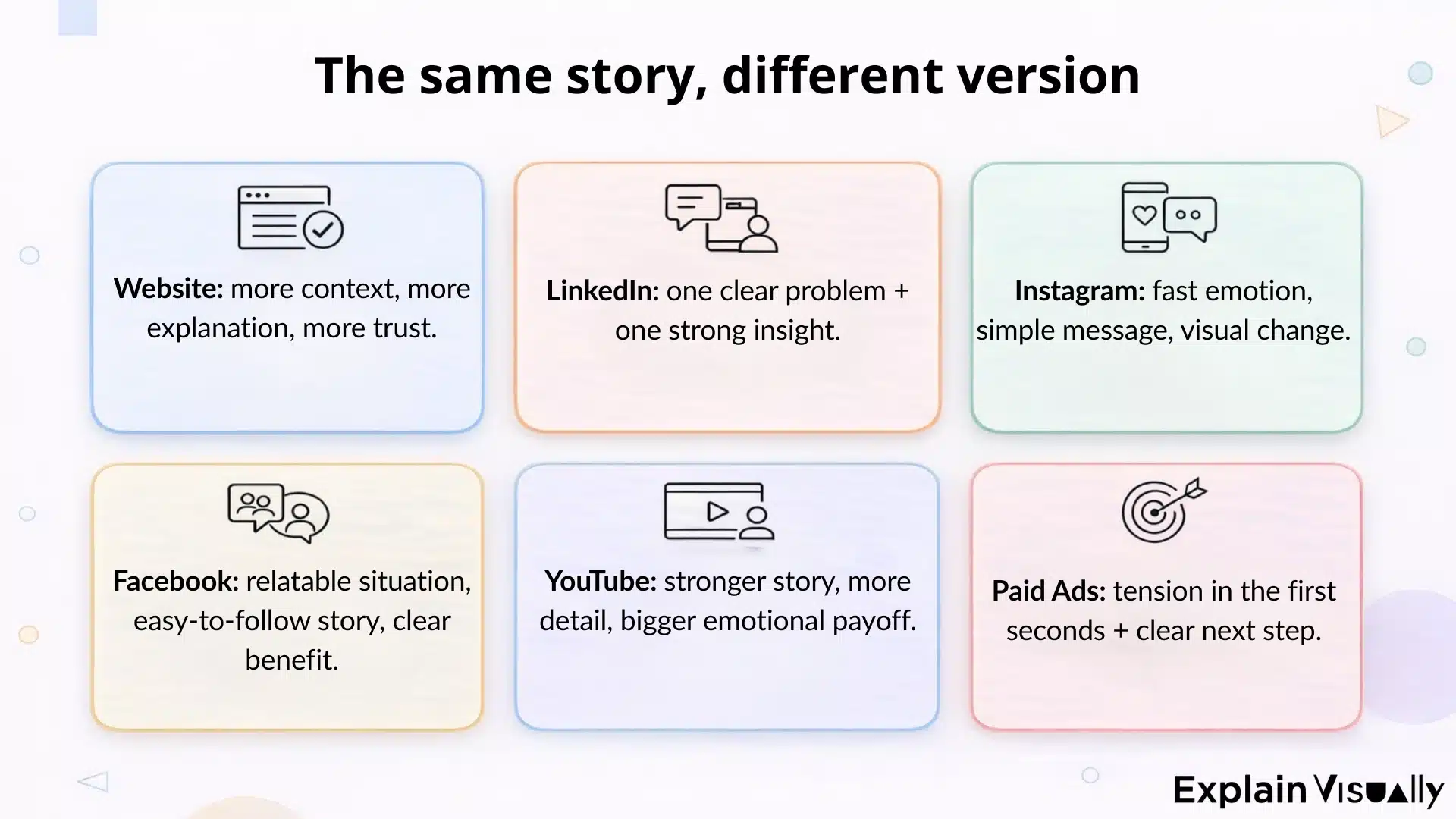
So what should you do? Create multiple versions over and over again? One strong story with several versions works much better. In practice, it is often enough to change the first five seconds, shorten the middle or end the video differently.
That is exactly what we do in many of our projects. First, we look for one story that shows the problem and the change in the clearest way. Only afterwards do we think about how to tell that same story on a website, in an ad or on social media, so that it works equally well everywhere.
If you are creating longer videos and want to see how storytelling changes when people are willing to spend more time with your content, read our article: Best video animations for YouTube Ads to boost your engagement
Best video animations for YouTube Ads to boost your engagement
Choosing the right studio matters more than the style
In the end, everything comes down to one question: Can the studio you work with find a story that people will actually remember?
It is easy to be impressed by an animation style, a strong portfolio or visually striking shots. All of that creates a great first impression. But a few days later, people rarely remember the colours, the transitions or even the logo. What they do remember is whether they saw their own problem in the video.
In this video for AleBilet, we began with the fears that anyone buying or selling tickets online knows very well: lack of trust, the risk of fraud and the uncertainty of whether everything will go smoothly. Only afterwards does the solution appear, along with the reason why AleBilet makes the whole process simpler and safer.
When you speak to a studio, pay attention not only to what they show in their portfolio, but also to what they ask you. Are they trying to understand what your audience is really struggling with? Do they want to know what frustrates them, what they are worried about, what they would finally like to make easier or change?
Maybe today you are still a brand that nobody knows. Maybe you do not have a recognisable logo, a huge budget or ten years of history behind you. Honestly, that does not have to be a problem. If you have a solution that genuinely helps, a well-told story will build trust much faster than even the most recognisable logo. People are looking for someone who understands their situation and can show them how things could look a little differently (not another company that wants to tell them how great it is).
That is where we start at Explain Visually. Before the first frame appears, we look for that one moment when the viewer thinks: finally, someone understands my problem. Once you find that moment, you stop creating a video about your company and start creating a story people actually want to watch.
𝐄𝐱𝐩𝐥𝐚𝐢𝐧 𝐕𝐢𝐬𝐮𝐚𝐥𝐥𝐲 – 𝐁𝟐𝐁 𝐚𝐧𝐢𝐦𝐚𝐭𝐢𝐨𝐧 𝐬𝐭𝐮𝐝𝐢𝐨:
• We create whiteboard animations for businesses
• We create corporate explainer videos
• We create visual storytelling for companies
Frequently Asked Questions
What is video storytelling for brands and why is it important?
Video storytelling for brands is a way to communicate a brand’s message through a compelling story rather than just presenting product features. Unlike text or any other medium, a well-crafted video story can simplify complex ideas and make them easier to understand and remember.
Why do people remember stories more than product features?
People remember stories because they connect on a personal level. A well told story activates emotions, uses characters, music, and images, and creates a clear narrative with a clear beginning. A good story helps viewers relate the message to their own life, which increases engagement and recall.
How does video storytelling improve customer engagement?
Effective video storytelling improves customer engagement by focusing on the viewer’s situation rather than the company. When the intended audience sees real people or relatable scenarios (for example, a young woman facing a common challenge), it becomes easier to connect emotionally. This leads to higher engagement, stronger attention, and more meaningful interaction with the video content.
What makes a compelling brand story in video marketing?
A compelling story in video marketing usually includes three elements:
-
A relatable problem.
-
A clear transformation.
-
A logical next step.
The best brands focus on a single core message, avoid overloading the viewer, and use proven storytelling techniques to capture audience’s attention quickly. The goal is to create a story that feels relevant.
How can brands use storytelling to build customer loyalty?
Brand storytelling helps build customer loyalty by creating an emotional connection and showing understanding of the customer’s needs. When a brand consistently shares authentic stories and delivers real value, it naturally leads to fostering loyalty and builds trust. Over time, this translates into stronger relationships and repeat decisions to buy products.
How do you craft videos that connect with your target audience?
To craft videos that resonate, you need a clear understanding of your target audience. A strong strategy focuses on:
-
What your audience is struggling with?
-
What they want to achieve?
-
What emotions drive their decisions?
A collaborative approach between marketing, sales, and creative teams helps ensure the final product speaks directly to the viewer and delivers the brand’s message in meaningful ways.
Why is video a more powerful way to communicate than other formats?
Video is a good way to communicate because it combines visuals, sound, and motion. Unlike text, it can engage viewers on a deeper level, reduce perceived complexity, and even create a sense of reduced stress when explaining difficult topics. With the right mix of creativity, visual appeal, and expertise, video can turn abstract ideas into something easy to follow and compelling to watch.
How can storytelling help brands stand out and ensure success?
A strong video story highlights real challenges, uses authentic stories, and delivers real results through clarity and emotion. When done well, storytelling helps ensure success by driving deeper understanding, stronger connections, and better business outcomes.
